

WOOSH was established to directly address the impacts of climate change by providing novel solutions in the transition to clean energy.
WOOSH’s management has over 40 years’ experience in Engineering (Design), Procurement, Construction and Maintenance and can provide turnkey, wind and hydro turbine solutions to suit multiple applications. We have already caught the attention of global engineering, resources and investment companies in Australia and around the world who are keen to partner with us.
WOOSH is established to directly address the impacts of climate change by providing novel solutions in the transition to clean energy.
WOOSH’s management has over 40 years’ experience in Engineering (Design), Procurement, Construction and Maintenance and can provide turnkey, wind and hydro turbine solutions to suit multiple applications. We have already caught the attention of global engineering, resources and investment companies in Australia and around the world who are keen to partner with us.
WOOSH in conjunction with Blak Magik has developed industry leading wind and hydro energy generation technology that will make a significant impact on the clean energy market. Our CEO and co-founder, Aboriginal engineer and inventor Chris Moore, has designed our novel Vertical Axis Wind Turbine (VAWT) along with and our revolutionary Toroid Resin Stator Axial Flux Electric Motor/Generator.
Our novel VAWT designs address many concerns with wind turbines providing models that require less space, inexpensive to produce, with faster power generation, and deliver more energy output than traditional wind turbines. Combined with our revolutionary Toroid Resin Stator Axial Flux Electric Motor/Generator, our novel VAWTs are significantly lighter, cost effective, and very reliable with a long service life.
Our novel VAWT design can also be used for hydro technology using a similar system which then generates power from water flow – making the turbine a Vertical Axis Hydro Turbine (VAHT).
Our CRVAWT design has tremendous benefits over other types of renewable energy technology including HAWTs, solar and hydro. Some of these advantages include:
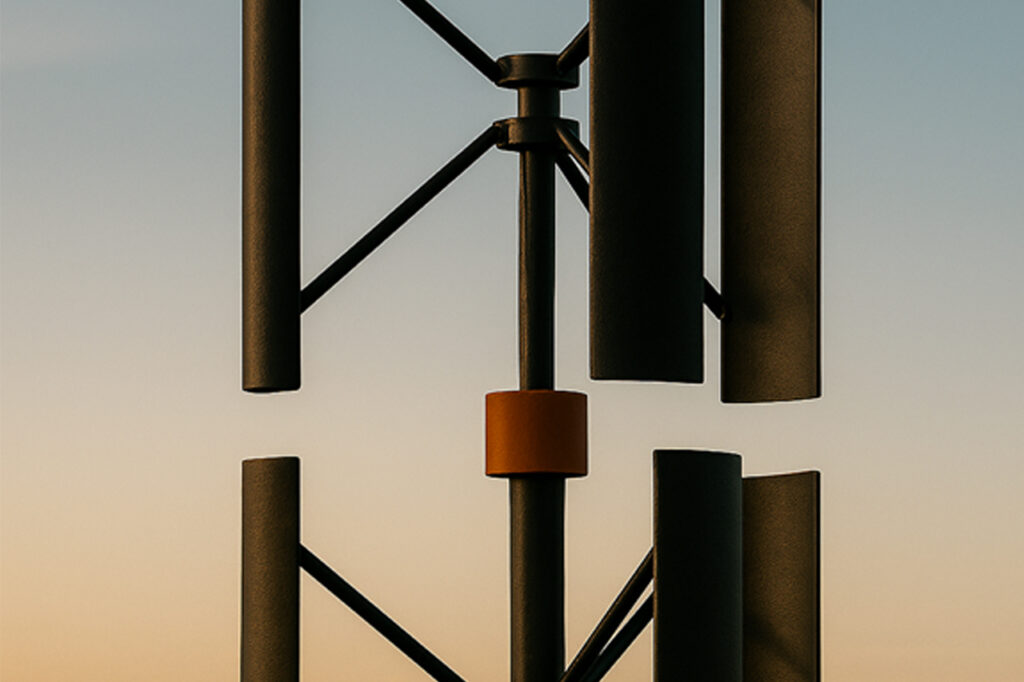
The configuration of our VAWT allows the blade to have maximum drag coefficient Cd going with the wind and minimum Cd when going into the wind which provides the maximum energy output

Vertical axis wind turbines can pick up wind coming from any direction. Horizontal axis wind turbines need to face the direction of the wind to operate, and rely on a mechanical yaw system to orientate the rotor in order to capture wind.
Due to this difference in operation mechanism, vertical axis wind turbines can be used to generate power even in unstable weather conditions such as turbulent, gusty wind. They function well in cities, mountain and coastal areas.
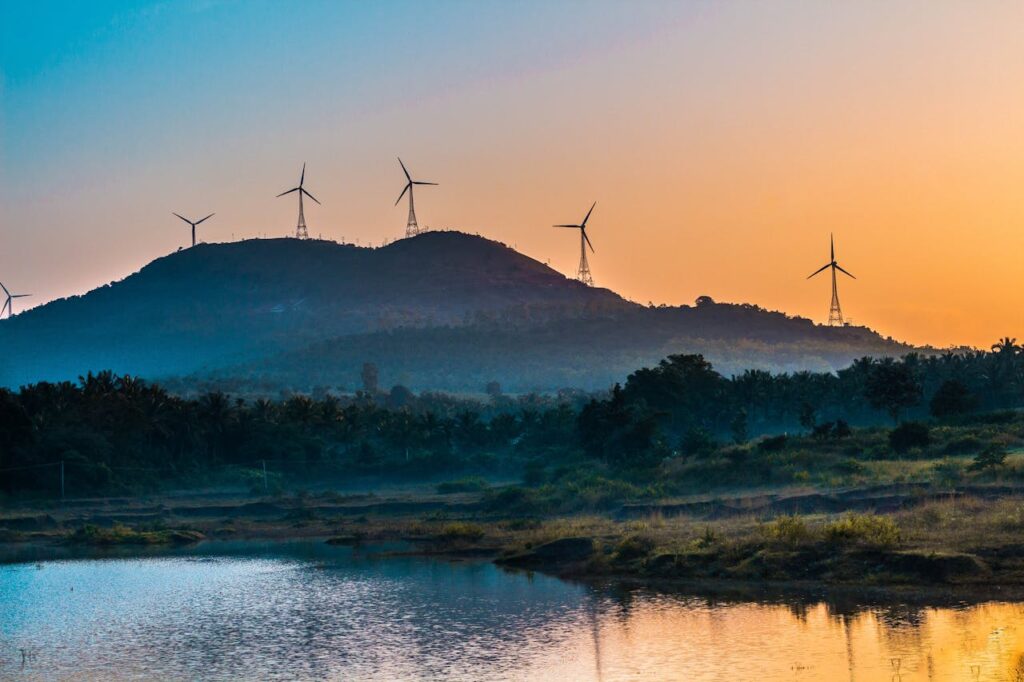
In a HAWT wind farm, the general rule-of-thumb for spacing is to place the turbines 14 diameters apart extending downwind. This is to avoid disruption of air flow and reduction in wind speed caused by one turbine to another, which aspects the power output of neighbouring units. Our VAWTs need only 1.4 diameter spacing.
Our CR-VAWTs can be grouped closer together in a wind power plant. This is because vertical axis wind turbines function well in turbulent wind, can be spaced 1.4 diameters apart, and will capture more energy per square meter of land.

Our VAWTs have a lower starting wind speed compared to other VAWTs and HAWTs.
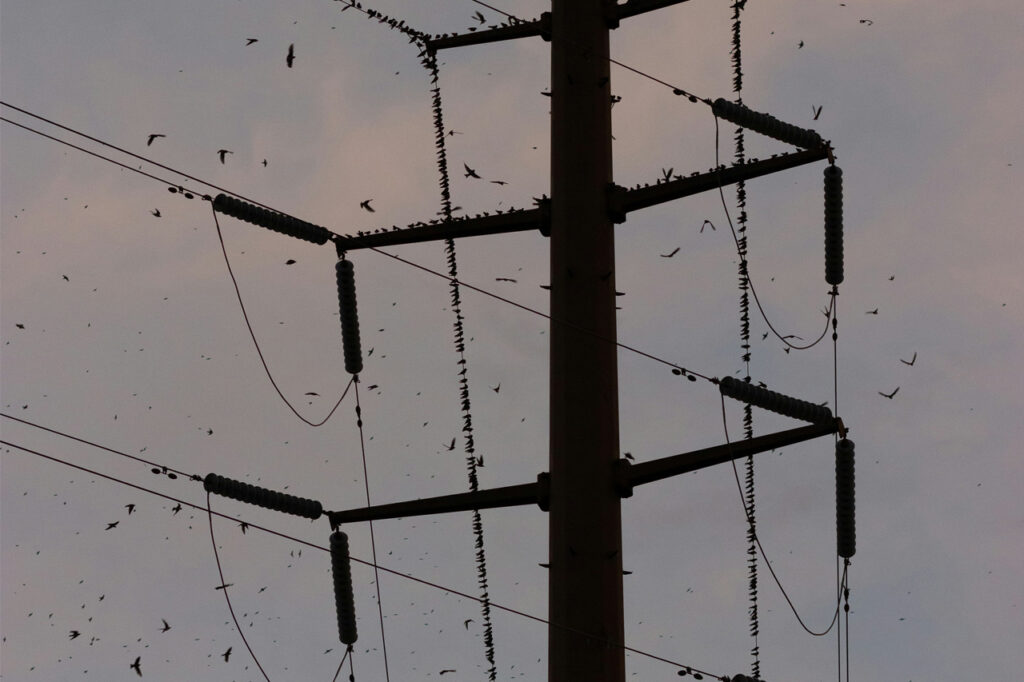
Our VAWTs movement is recognised by birds and bats and bring lower levels of environmental harm including for birds and other flying animals, decreasing the chance of animal casualty.
Our VAWTs spin at a slower rate than HAWTs, thus operate with quieter noise emission, reducing disturbance from noise.
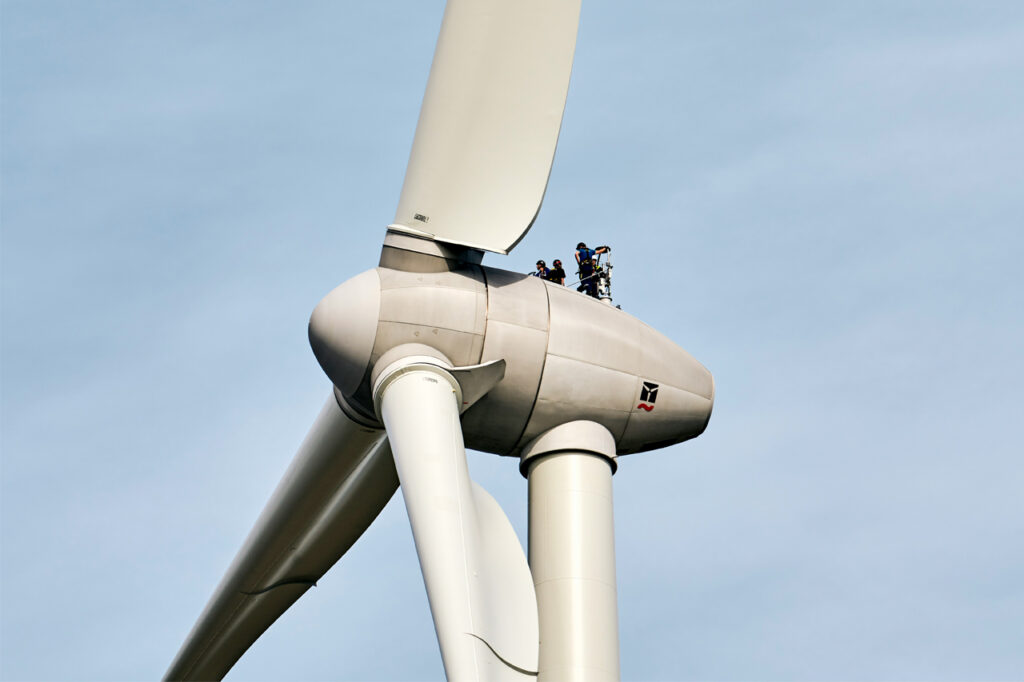
Due to their smaller size, vertical axis wind turbines are easier to transport, set up, and maintain. For example, all parts of one 12kW turbine can be delivered in a single truck with a 6-meter-long storage space.
Maintenance workers do not have to climb as high to reach parts of the turbine because the major components, such as the generators, are built closer to the ground. Our revolutionary Toroid Resin Stator Electric Motor/Generator have 9 x better reliability and longevity than a conventional generator. Low stress blades in VAWT configuration ensures increased service life and reliability.
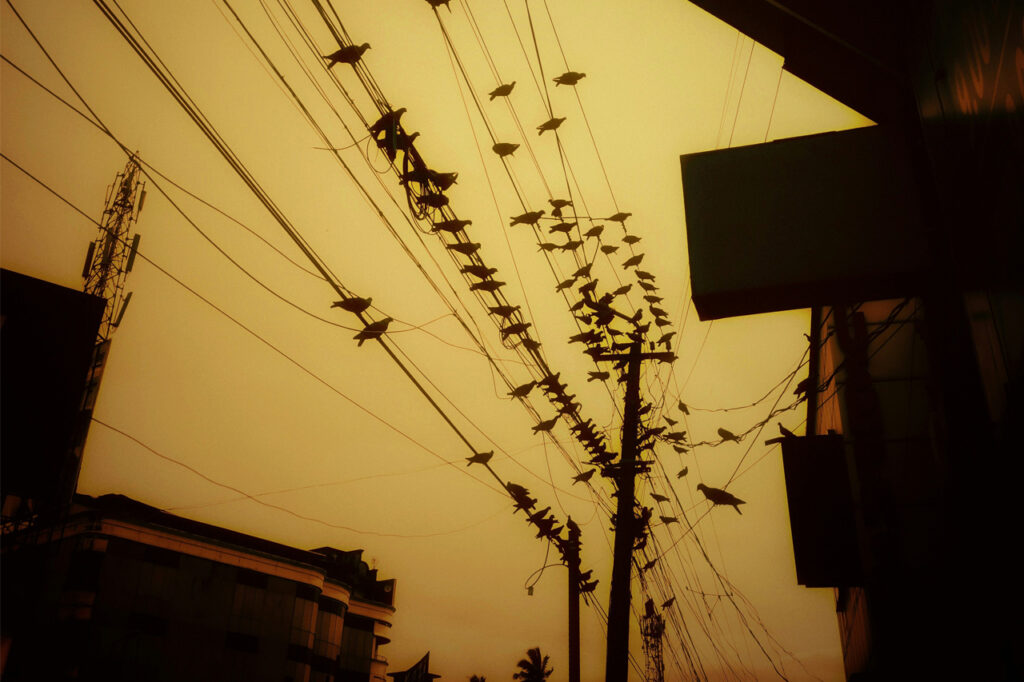
Being safer to wildlife and quieter than HAWTs our turbines can be erected close to dwellings and existing infrastructure, even integrated into lighting poles/towers, telecommunication towers and neighbourhood batteries.
And mounted on skids that can be sited on existing buildings, or where soil conditions won’t allow standard foundations. Solar needs vast amounts of land and HAWTs need to be located away from populated areas.
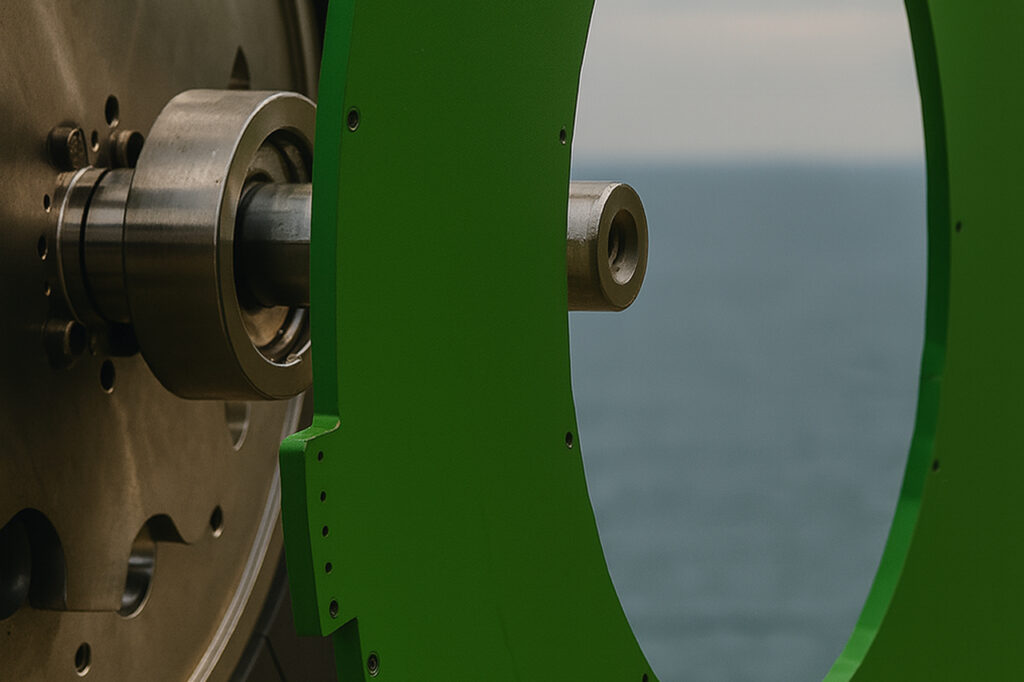
Our revolutionary Toroid Resin Stator Axial Flux Electric Motor/Generator provides industry leading energy density
To greater understand our VAWT’s impact on existing renewable energy technology, it is relevant to make a comparison with solar technology, as a widely used solution. In on-roof installations for VAWTs v solar (as an example), the benefits are:
The following diagrams show the efficiency of our VAWTs v solar where there is significantly greater consistency for production of energy for each day as well as the year, given also our VAWTs do not rely on seasonal differences in sunshine exposure.